Arthroscopic Shaver Blade Tips:
A Comprehensive Overview
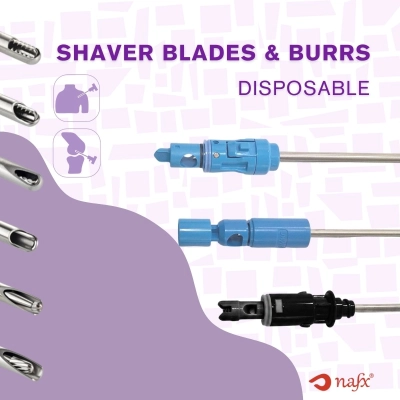
Arthroscopic surgery relies on a variety of specialized instruments, with shaver blades being a critical component. These blades are designed to resect and shape tissues within the joint space, allowing surgeons to address a range of orthopedic conditions. The choice of blade tip is crucial, as it directly impacts the efficiency and precision of the procedure. Here's a detailed look at four commonly used shaver blade tips:
1. Tear Drop Blade:
The tear drop blade is a versatile tool, particularly well-suited for addressing torn or irregular tissue surfaces. Its unique tear-shaped configuration facilitates effective tissue capture and cutting. This design allows for precise removal of damaged tissue, promoting a smoother joint surface.
The tear drop blade is often employed in procedures involving meniscal tears, synoviectomy, cartilage damage, and soft tissue debridement.
2. Inner Serrated Blade:
The inner serrated blade is engineered for precision in cutting cartilage and soft tissues. The serrated (toothed) edge provides a controlled cutting action, minimizing tissue damage and promoting accurate resection.
This blade is often favored for tasks requiring meticulous tissue removal, such as trimming cartilage flaps, smoothing articular surfaces, and removing loose bodies within the joint.
3. Double Serrated Blade:
The double serrated blade is designed for more aggressive tissue resection. Its double-toothed configuration allows for efficient removal of fibrous or dense tissues.
This blade is particularly useful in procedures involving the removal of scar tissue, the reshaping of bone, or the debridement of significant tissue damage. The double serrated blade's aggressive cutting action can expedite the surgical process.
4. Full Radius Blade:
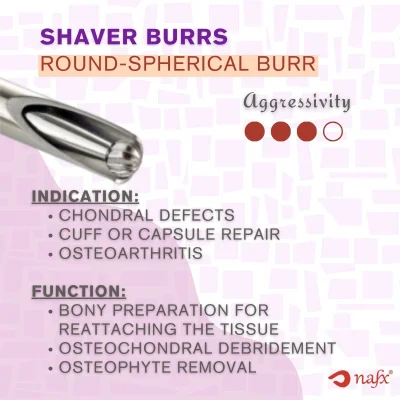
The full radius blade is characterized by its smooth, curved cutting edge, making it ideal for creating uniform surfaces across larger areas.
This blade is frequently used for cartilage shaping and smoothing, as well as for removing osteophytes (bone spurs). The full radius blade provides a controlled and consistent cutting action, allowing surgeons to achieve a desired contour with precision.
>>>
The selection of the appropriate shaver blade tip is crucial for achieving optimal surgical outcomes. Surgeons consider factors such as tissue type, the extent of the pathology, and the desired surgical goals when choosing the most suitable blade. The diverse range of blade tips allows for tailored approaches to various orthopedic conditions, enhancing the precision and effectiveness of arthroscopic procedures.